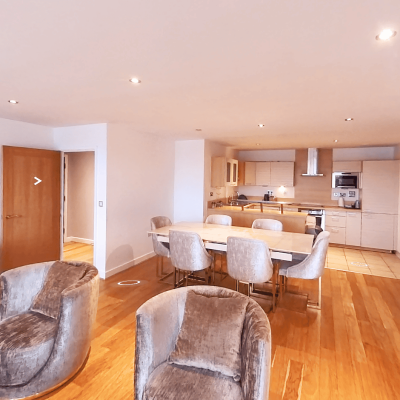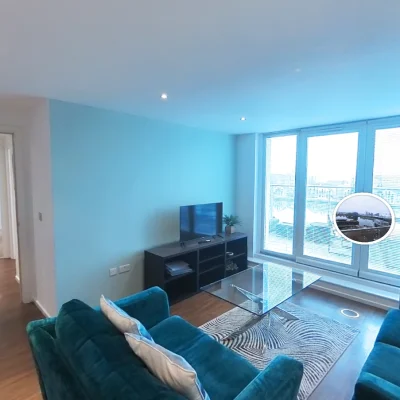

Most people hear “virtual tour” and immediately think of property listings on Rightmove. And while real estate was one of the first industries to embrace 3D virtual tours, it is far from the only one benefiting from the technology.
Today, businesses of every shape and size are using immersive 3D virtual tours to attract more customers, build trust before a first visit, and stand out in markets where attention is harder to earn than ever. If your business relies on people walking through a door, a virtual tour can start doing that job for you around the clock.
In this post we cover why virtual tours work, 25 types of businesses that are already seeing results, and how to get started with a professional 3D virtual tour capture for your own space.
Why Virtual Tours Work
Before we get into the list, it is worth understanding the psychology behind why virtual tours are such an effective marketing tool.
They build trust before commitment. Customers are more likely to visit, book, or buy when they already feel familiar with a space. A 3D virtual tour removes the unknown, replacing hesitation with confidence.
They work 24 hours a day, 7 days a week. Unlike a sales team or a physical showroom, a virtual tour never closes. It is always available, always consistent, and always giving potential customers a reason to choose you.
They attract higher-quality leads. Someone who has already explored your space virtually and still wants to visit is far more committed than a cold enquiry. Virtual tours filter out the browsers and surface the buyers.
They extend your reach beyond geography. A customer in a different city, country, or continent can walk through your space before deciding to make the journey. For high-value decisions, that matters enormously.
They keep people on your website longer. Search engines reward pages where visitors spend time. An embedded virtual tour dramatically increases dwell time, which supports your SEO rankings and drives more organic traffic over time.
25 Types of Businesses That Can Grow with 3D Virtual Tours
1. Estate Agents and Property Agencies
The most established use case, and still one of the most powerful. Estate agents using 3D virtual tours report fewer wasted viewings, more qualified leads, and faster sales. Buyers can shortlist remotely before committing to a visit, meaning every in-person viewing counts.
2. Airbnb Hosts and Short-Let Landlords
Guests book with their eyes. A 3D virtual tour of your short-let property builds confidence before booking, sets accurate expectations, and reduces the “is it really like the photos?” messages that eat into host time. Hosts with virtual tours consistently report higher click-through rates and better conversion on listing pages.
3. Hotels and Boutique Guesthouses
Hotels compete not just on price but on experience. A virtual tour lets potential guests walk through the lobby, explore room types, and discover the spa, restaurant, or terrace before they book. That immersive pre-arrival experience drives direct bookings and reduces dependence on OTA commission fees.
4. Holiday Cottages and Serviced Apartments
For self-catered stays, guests want to know exactly what they are getting. A virtual tour of the cottage, its layout, and its surroundings removes doubt and increases bookings — particularly for premium or remote properties where guests are making a significant investment of time and money.
5. Property Developers and New Build Schemes
Off-plan sales are challenging because buyers are committing to something that does not yet exist. 3D virtual tours of show homes and completed units change that. Developers can sell phases faster, reach out-of-area and overseas buyers, and use tours in investor presentations to build confidence in their scheme.
6. Commercial Property Agents
Offices, retail units, warehouses, and industrial spaces all benefit from virtual tour marketing. Commercial tenants and buyers often need to shortlist properties before committing to a site visit. A tour lets them assess layout, scale, and suitability remotely, saving time for agents and occupiers alike.
7. Restaurants and Cafés
Before making a reservation, diners want to know what the atmosphere feels like. A virtual tour of your restaurant, from the bar to the private dining room, helps guests visualise their visit and increases bookings — particularly for special occasions where the setting matters as much as the food.
8. Event Venues and Wedding Venues
Couples and event planners often visit ten or more venues before making a decision. A 3D virtual tour lets you get on the shortlist without requiring a physical visit first. Showcase your ceremony space, reception hall, grounds, and facilities to attract more serious enquiries and reduce the time your team spends on unqualified showrounds.
9. Conference Centres and Meeting Room Providers
Corporate clients booking conference space need to know the room will work for their event. A virtual tour showing seating configurations, AV facilities, breakout areas, and catering spaces gives event organisers the reassurance they need to book with confidence.
10. Fitness Centres and Gyms
Joining a gym is a commitment. Prospective members want to see the equipment, the changing rooms, the studios, and the general vibe before they sign up. A virtual tour reduces the barrier to membership enquiries and gives you an edge over competitors who rely on photos alone.
11. Yoga Studios and Wellness Centres
Wellness is personal. Clients choosing a yoga studio, meditation centre, or holistic therapy space want to feel a connection before they book. A virtual tour communicates the atmosphere and intention of your space in a way that photos and words simply cannot.
12. Spas and Beauty Salons
For premium treatment experiences, the environment is part of the product. A 3D virtual tour of your spa or salon — treatment rooms, relaxation areas, reception — helps attract clients who are choosing on experience as much as on service menu.
13. Schools and Colleges
Prospective pupils and parents want to know what a school feels like, not just what it looks like on paper. A virtual tour of classrooms, sports facilities, common rooms, and grounds is a powerful tool for open days, international recruitment, and any school that competes for pupils.
14. Universities and Higher Education
Student recruitment is a highly competitive, internationally focused process. A 3D virtual tour of campus facilities, libraries, accommodation, and social spaces allows prospective students anywhere in the world to experience your university before they apply or accept a place.
15. Independent Retailers and Showrooms
Online shopping has raised the bar for physical retail. A virtual tour of your showroom or retail floor gives customers a reason to visit in person, while also letting them browse your space from home. For furniture, interiors, and specialist retail, this is a particularly powerful combination.
16. Car Dealerships
High-value purchases demand high levels of trust. A 3D virtual tour of your dealership — showroom floor, service centre, customer lounge — builds confidence and differentiates your business in a competitive market where many buyers research extensively before setting foot through the door.
17. Healthcare Clinics and Dental Practices
For many patients, visiting a clinic for the first time brings anxiety. A virtual tour of your reception, treatment rooms, and waiting areas helps reduce that anxiety, builds familiarity, and makes your practice feel welcoming before the first appointment.
18. Veterinary Practices
Pet owners are protective and discerning. A virtual tour showing your consultation rooms, surgical facilities, and recovery areas communicates professionalism and care — building the trust that is essential for clients choosing where to bring their animals.
19. Co-Working Spaces and Flexible Offices
The flexible workspace market is growing rapidly and competition for members is fierce. A virtual tour lets you show hot desks, private offices, meeting rooms, kitchen facilities, and communal areas to prospective members who are comparing multiple spaces online before visiting.
20. Museums and Visitor Attractions
Virtual tours open your attraction to visitors who cannot reach you in person — school groups, tourists planning a future visit, researchers, and people with mobility limitations. They also work as powerful marketing tools, giving people a taste of the experience that makes them want to visit for real.
21. Art Galleries and Exhibition Spaces
Artists, collectors, and galleries use virtual tours to showcase exhibitions to a global audience. A 3D tour lets remote buyers browse work in context, helps galleries attract international artists, and keeps past exhibitions alive online long after they close.
22. Churches and Places of Worship
Historic churches and places of worship attract heritage visitors, event enquiries, and new congregants. A virtual tour helps communities share their space with a wider audience and supports venue hire marketing for weddings, concerts, and community events.
23. Care Homes and Assisted Living Facilities
Families choosing a care home for a loved one face one of the most emotionally significant decisions of their lives. A virtual tour of communal areas, bedrooms, gardens, and facilities provides transparency and reassurance at a stage when trust is everything.
24. Photography and Film Studios
Creative studios can showcase their sets, backdrops, lighting rigs, and production facilities to potential clients who are hiring space for shoots. A virtual tour is particularly effective for studios that rent to clients who need to plan productions in advance.
25. Construction and Architecture Firms
Architects and construction companies use virtual tours to document completed projects for their portfolio, walk clients through finished developments, and present work to prospective clients in a far more immersive way than a brochure or a slide deck ever could.
Real-World Examples of Virtual Tours in Action
A hotel in the Lake District embedded a 3D tour of its rooms, restaurant, and grounds on its booking page. Direct bookings through the hotel’s own website increased in the months that followed, reducing commission paid to third-party booking platforms.
A wedding venue in Surrey added a virtual tour to its enquiry page. Prospective couples who viewed the tour before requesting a showround were significantly more likely to convert to a booking, and the average time between enquiry and booking decision shortened considerably.
A commercial letting agent in Manchester started adding virtual tours to every vacant office instruction. Occupiers from out of the region were able to shortlist remotely, meaning site visits were reserved for serious applicants and the average time to let reduced across the portfolio.
A yoga studio in Bristol added a virtual tour to its website after struggling to communicate the feel of its space through photos alone. New member sign-ups increased as prospective clients felt they already knew and trusted the environment before arriving for their first class.
Choosing the Right Virtual Tour Solution
Not all virtual tours are created equal. When choosing a virtual tour provider, look for the following.
Professional capture. A 3D virtual tour is only as good as the quality of the capture. Professional-grade 3D scanning hardware captures far more detail and accuracy than a standard camera or smartphone setup.
AI-enhanced processing. The best virtual tour platforms use AI technology to enhance lighting, stitch scans seamlessly, and deliver a smooth, polished walkthrough. This is what separates a professional result from a DIY attempt.
Automatic floor plans. Dimensionally accurate floor plans generated from the scan add significant value for commercial, property, and venue applications.
Embed compatibility. Your tour should embed cleanly on your website, your listing portal pages, and anywhere else you market your business — with a single link or embed code.
Certified local capture professionals. Working with a trained, accredited capture agent ensures consistency of quality and a smooth experience from booking through to delivery.
Getting Started with a Professional 3D Virtual Tour
Getting a professional 3D virtual tour for your business is straightforward with Pixel 3D Tour.
Step 1 — Find a local agent. Search the Pixel 3D Tour directory to find a certified capture professional near your property or venue.
Step 2 — Book your capture session. Choose a time that works around your business hours, staff, and customers. Our agents work flexibly to minimise disruption.
Step 3 — Let AI do the work. Once the capture is complete, our AI processing pipeline enhances and assembles your tour to the highest standard.
Step 4 — Go live. Your finished tour is delivered with a shareable link and embed code, ready to publish on your website, listing pages, and social channels.
The Takeaway
Virtual tours are no longer a niche tool for property marketing. They are a mainstream, accessible, and highly effective way for businesses of all kinds to attract more customers, build trust faster, and convert browsers into buyers.
If your business depends on customers choosing to walk through your door, a 3D virtual tour is the most powerful marketing tool you are not yet using.
Ready to bring your space to life? Find a certified Pixel 3D Tour capture agent near you and book your professional 3D virtual tour today.
Published by Pixel 3D Tour — the UK’s professional 3D virtual tour capture network. Certified local agents. AI-powered processing. Immersive results.